The most common problems in nail styling - practical tips from one stylist to another
The most common nail styling problems and proven solutions: single and central air bubbles, peeling color, yellowing gel, an overheating drill and flakes in No Wipe Top.
Even if you work with proven products, use a full nail plate preparation system and take care of every stage of the styling, problems can sometimes appear that are hard to explain at first glance. In salon practice, however, it very often turns out that there is a specific reason behind most complaints. Below you will find a few situations that regularly come up in stylists’ work, along with proven ways to solve them.
1. Air bubbles on only one or two nails
It happens that you do the styling according to all the rules, you use the full Excellent PRO system, and yet one or two nails regularly get air bubbles. Most often the problem concerns the index or middle finger.
We very often see this in clients who work at a computer, accountants, hairdressers or people who perform repetitive hand movements for many hours. The cause then is not improper nail plate preparation, but constant mechanical pressure acting in a specific spot. It can be the pressure of a pen, scissors or other tools used every day during work.
How to solve the problem?
In such cases it is worth extending the standard Excellent PRO system with an acid primer (if the nail plate is not damaged).
Work scheme:
- Apply a dehydrator and wait until it evaporates.
- In the spot where air bubbles regularly appear, apply a small amount of acid primer.
- Wait until the product has completely evaporated.
- Apply a bonder.
- Paint the nail plate with a layer of Grafen Base.
The acid primer additionally etches the nail plate in the problematic spot, increasing the adhesion of the product. In most cases this treatment effectively eliminates recurring air bubbles and the client comes back for her next appointment without any lifting.
2. Central air bubbles - why does the mass come away from the center of the nail? (for the case of doing an infill)
This is a situation that can surprise even experienced stylists. The sides of the nail near the walls hold perfectly, and yet an air bubble appears in the center.
Most often the problem does not result from incorrect nail plate preparation or from the quality of the products. The cause is often performing refills many times without completely removing the old base.
For example:
- after the first styling the base is 3 weeks old,
- after the next refill 6 weeks,
- after the following one already 9 weeks or more.
During this time the client uses her hands normally, exposes the styling to minor mechanical injuries, the action of UV rays and everyday strain. Over time the structure of the old base gradually weakens, and the bond between the base and the natural nail plate becomes less stable.
The result can be exactly this central air bubble.
How to prevent it?
If the client regularly wears the styling and you perform successive refills, it is best at every appointment, or at least every second or third appointment, to remove the entire mass down to the natural nail plate and perform the full Excellent PRO system again together with a fresh layer of Grafen Base.
Thanks to this you always work on a new, stable foundation, and the adhesion stays at the highest level for the entire period of wearing the styling.
3. The color peels off the gel in sheets
The styling looks perfect, the color has been applied flawlessly, and after a few days the client reports that the color is coming off the gel in whole sheets. There are most often two causes.
Incompatible products
If you use a gel of one brand and a color of another, you cannot always be sure that the products will cooperate properly chemically. In such a situation it is worth gently matting the surface of the gel before applying the color. Thanks to this you create additional mechanical adhesion, which will help the products bond with each other.
Over-curing the gel
This is a problem that appears more often than it might seem.
Imagine that you do the styling using the method without filing the gel surface, nail by nail. The first nail goes into the lamp at the very start of the work, and the last one only after a few minutes. If the lamp shines the whole time, the first nail can be cured not for a minute, but even for 5-10 minutes. As a result the gel surface becomes very strongly cured and exceptionally smooth - it resembles a sheet of glass. The color then has much harder conditions to bond with the surface.
How to work correctly?
When working nail by nail or two nails at a time:
- at the start cure the product for only 15-30 seconds,
- only until the mass is immobilized,
- do the full curing only after finishing the modeling of the whole hand.
Thanks to this the first nail will not stay in the lamp for several extra minutes, and the risk of over-curing will be eliminated.
4. Why do milky or pink products yellow slightly?
Sometimes stylists report that despite working with a lamp and Excellent PRO products they notice a slight color change in milky, cover or pink products. In most cases the cause is again too long a curing time.
The products are designed to work within specific parameters - usually about a minute, at most two minutes in the lamp. If the first modeled nail stays under the light for several extra minutes, a temporary shift in shade can appear.
Good news: this phenomenon is reversible. If the client notices a slight yellowing right after the styling is done, you can reassure her. After a short time - often already after leaving the salon or after about an hour - the product returns to its original color.
The best solution, however, is to apply the same rule as before: short pre-curing during the build and full curing only at the end of the work.
5. Multifunction Liquid and tips - one common mistake that can cost you adhesion
Multifunction Liquid is a product that most stylists love for its versatility. It works great for removing the inhibition layer or for dehydrating the nail plate. It is worth remembering, however, about a situation in which it absolutely should not be used.
If you work with the tip extension method and after working the tip you want to remove the dust before applying the gel, do not reach for Multifunction Liquid.
The product contains organic solvents that can dissolve (deform) the previously matted surface of the tip. In practice this means that instead of creating a perfect base for the next products, you deform the surface of the tip again.
Acetone works similarly, which is why it also should not be used for this purpose.
If you want to clean a worked tip of dust, the best solution will be isopropyl alcohol, that is Clean & Prep. It will let you remove contaminants without interfering with the structure of the tip’s surface.
6. Multifunction Liquid and acetone - great for cleaning, but not for everything
Multifunction Liquid and acetone are very effective solvents. They handle gel dirt, product residue or dust excellently, which is why many stylists also use them when cleaning the workstation. And rightly so - a dirty desk or the grille of an extractor can be thoroughly cleaned this way.
You must remember, however, one very important rule. Never use these products to clean UV/LED lamps, drills or other devices made of plastics.
Strong solvents can:
- remove the manufacturer’s prints and markings,
- mat or damage the plastic surface,
- leave permanent discoloration,
- shorten the lifespan of the equipment.
For cleaning devices, pure isopropyl alcohol or wipes intended for surface disinfection will work much better.
7. The drill handpiece heating up - where does the problem come from?
One of the most frequently asked questions is: “Why does my drill handpiece heat up during mass removal?”. Most often the cause is very simple - overloading the device.
Start with regular cleaning
During daily work dust gets inside the handpiece, which over time can accumulate around the mechanical parts. That is why it is worth regularly:
- unscrewing the handpiece according to the manufacturer’s recommendations,
- removing the accumulated dust,
- checking the condition of the bit-clamping mechanism.
For cleaning it is best to use a small brush. Do not use compressed air. Contrary to appearances it often does not solve the problem, and can lead to packing the dust into hard-to-reach places and make later cleaning more difficult.
Pay attention to work technique
The second common reason for overheating is loading the device for too long during mass removal. Removing the styling should be done at suitably high speeds and with light guidance of the bit. If the bit is blunt or we work with too strong pressure, the motor has to do much more work. As a result the handpiece starts to heat up. In practice, efficiently removing the mass from both hands should take about 3-5 minutes.
If it takes much longer:
- check the condition of the bit,
- assess whether it needs replacing,
- verify the amount of pressure during work.
Often just replacing a worn bit lets you shorten the work time and eliminate the overheating problem.
More information about the causes: How to work with a nail drill to make it your partner for years.
And if you are only just learning?
If you are at the beginning of your journey and work more slowly, there is nothing wrong with that. It is simply worth taking short breaks. For example, you can remove the mass from one hand, move on to working the cuticles, give the device a moment to cool down, and then return to the other hand. This is a simple way to protect the equipment while learning.
8. “Flakes” in No Wipe Top - where do they come from?
You know that moment when you open the bottle of top and notice transparent, jelly-like fragments inside that look like small flakes?
Although it looks worrying, the cause is very simple. It is simply partially cured product. No Wipe Tops contain a large amount of photoinitiators, thanks to which they cure quickly and effectively. At the same time this makes them very sensitive to light.
Any exposure to:
- the light of a UV/LED lamp,
- intense daylight,
- direct sunlight,
can start the polymerization process. The problem most often appears when an open bottle stands too close to the lamp or stays in a sunlit spot for a longer time.
Additionally, during work it often happens that the neck of the bottle gets dirty with product. If that fragment gets exposed to light, the top starts to cure right there. Later, during the next applications, the cured fragments end up inside the bottle and start floating throughout the product.
How to prevent it?
It is very simple:
- do not place the top near the curing lamp,
- do not leave it in a sunlit spot,
- close the product right after use.
Thanks to this the top will keep its perfect consistency for the entire period of use.
Summary
Many problems that at first glance look like a product defect actually result from small technical details, the way of working or natural processes occurring while wearing the styling. The better we understand the causes of complaints and unusual situations, the faster we can solve them, and clients come back to the salon with full trust in our work. It is exactly these small experiences gained every day at the table that often make the biggest difference in the durability of the styling and the comfort of the stylist’s work.
Do you have a problem we have not described here? Every stylist sooner or later meets a situation that at first glance seems hard to explain. If you are struggling with a styling problem and do not know what might be its cause, write to us - get in touch with the Excellent PRO team, and we will be happy to help find a solution.
What’s more, if the topic turns out to be valuable for other stylists as well, we will expand this article with further tips and solutions. This way, together we will build a base of practical knowledge that will help the whole industry avoid the most common problems in everyday work.
Remember - you do not have to stay alone with the problem. You can always count on our support.
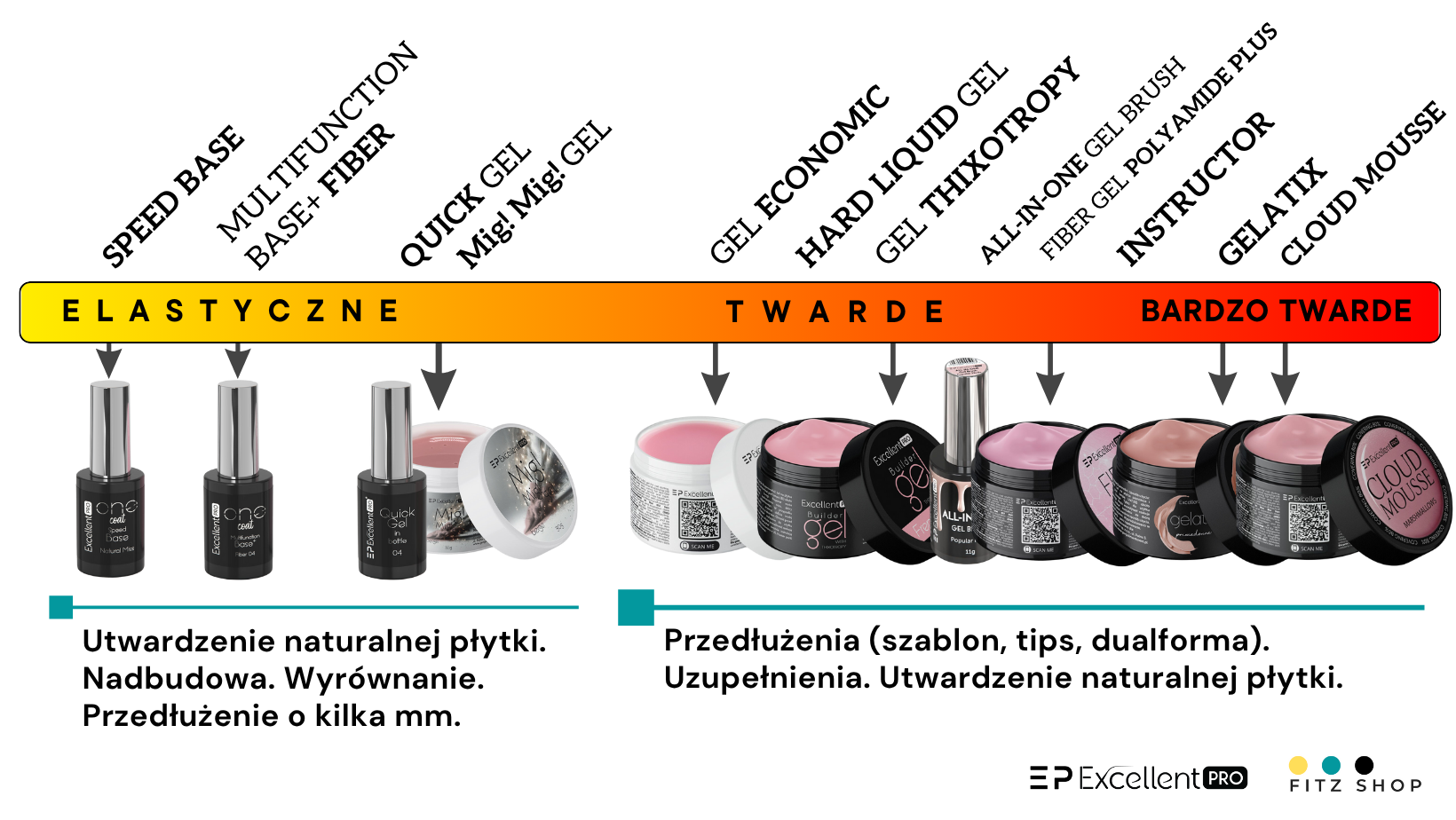
Check also the exact curing times of Excellent PRO products, compare the coverage levels of gels or pick a product in the interactive comparison tool.